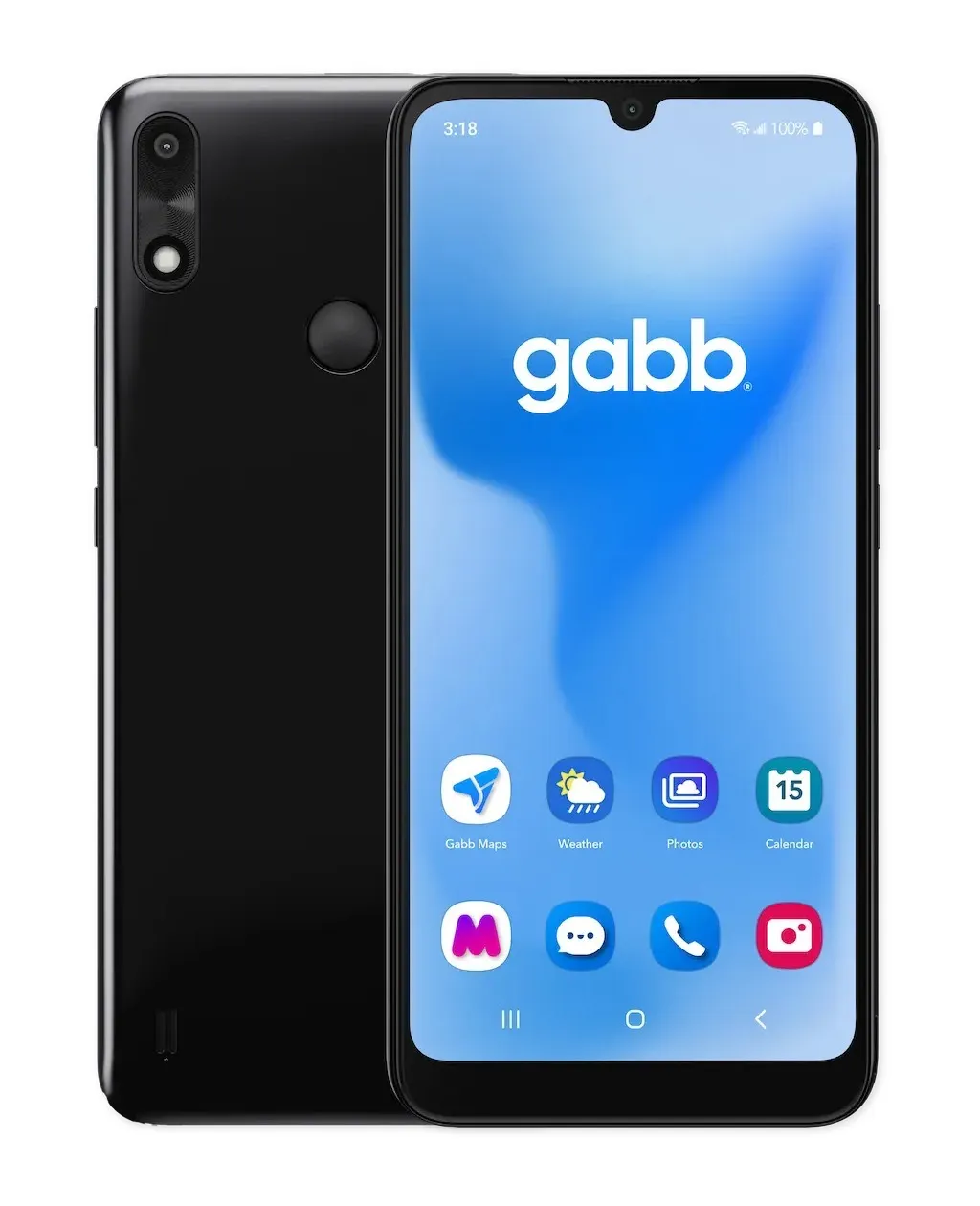
What the Gabb Phone is
The Gabb Phone is a range of devices made by Gabb Wireless, a Utah-based company that specializes in children's communications technology. According to manufacturer documentation, Gabb phones support calls, texts, a basic camera (on some models), and GPS location sharing. They do not have a web browser, an app store, social media applications, or any way to download new software. The restrictions are built into the device's firmware, not managed through an external parental-control app that can be deleted.
How the restrictions work
Unlike parental-control apps installed over a standard Android device, the Gabb Phone's restrictions are part of the device's operating system. According to Gabb's documentation, there is no mechanism to access content outside what Gabb has approved, regardless of the child's technical ability. Parents manage GPS location, approved contacts, and account settings through the Gabb parent app. The service requires a Gabb plan — the device does not accept standard carrier SIM cards. User reports from parents describe the hardware-level restriction as meaningfully different from software parental controls, which determined children have been known to bypass.
Who should buy it
The Gabb Phone is best suited for parents of children roughly aged 8–11 who have decided the child needs a communication device — for after-school safety, coordination, or independent travel — but are not ready to introduce smartphone capabilities. The hardware-level restrictions are the core value proposition: a technically capable child cannot access content that isn't there. User feedback from parents consistently identifies this as the reason for choosing Gabb over a parental-control app on a standard phone.
Who should skip it
Older tweens (12+) and teenagers are likely to find the Gabb Phone's restrictions too limiting for their peer environment, where group chats and shared apps are social currency. For that age group, a Pinwheel (more controllable app access) or Bark Phone (monitoring-focused, more permissive) is likely a better fit. Parents looking for granular control over individual app permissions or screen-time scheduling will also find Gabb's relatively simple dashboard limiting compared to Android-based alternatives.
The bottom line
The Gabb Phone is the right pick for its target audience: parents of younger children who want a communication device with no route to the internet or social media. The hardware-level restriction model is the strongest argument for the device — it removes the adversarial dynamic of a child trying to outsmart a parental-control app. The mandatory Gabb plan is a real cost consideration, but the peace of mind it provides for the right age group is well-documented in user reports.