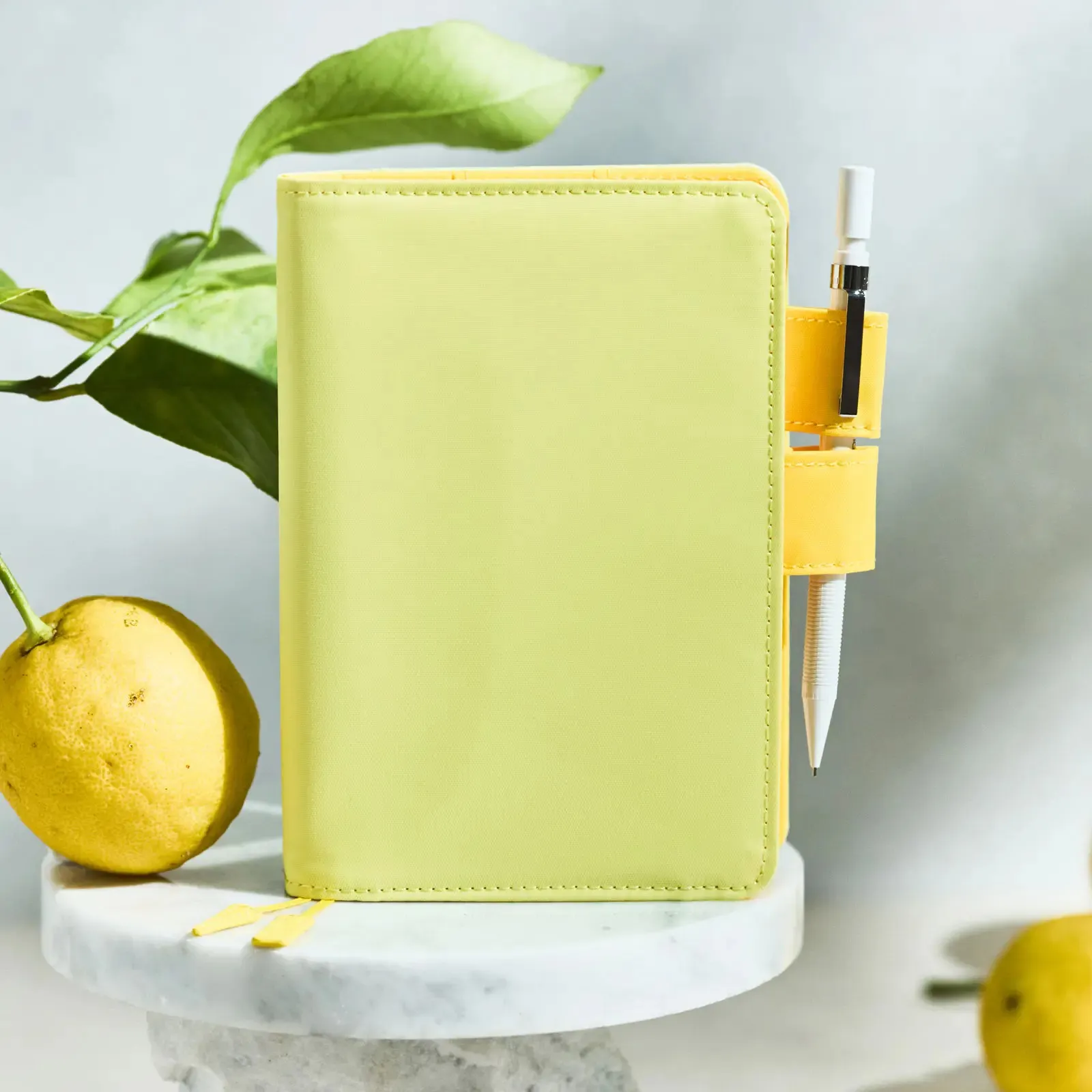
What the Hobonichi Techo is
The Hobonichi Techo is a family of yearly paper planners made by the Japanese company 1101 Hobonichi. The core product is the Original — a small A6 planner (roughly 4×6 inches) with a daily grid page for every day of the year, a weekly spread, and a monthly calendar. Pages are printed on Tomoe River paper, a 52gsm Japanese paper noted for its opacity relative to its thinness, and its compatibility with fountain pens, gel pens, and most writing instruments without bleed-through. According to manufacturer specifications and extensive documentation in the paper-planning community, the paper takes ink cleanly and dries quickly.
Why moving planning to paper changes things
The case for paper planning is less about paper itself and more about the notification surface. A digital calendar or task manager lives in the same environment as messages, social media, and news — opening it means opening the device. A paper planner exists outside that environment entirely. Research by Gloria Mark at UC Irvine on attention fragmentation suggests that the context switch cost of moving between tasks is a primary attentional drag in digital work. Separating planning and reflection from the phone removes one of the main reasons to open the device during focused time.
What users report about the paper
Tomoe River paper is the most consistently praised element in Hobonichi user reviews. Based on user reports across planner communities, the paper's thinness keeps the book compact (365+ daily pages in a pocketable form factor), while the opacity treatment prevents most pen types from showing through to the reverse side. The paper has a slight sheen that some users notice under directional light — this is a characteristic of Tomoe River paper, not a defect. For most writing instruments, user reports describe smooth, low- resistance writing with reliable ink drying.
Who should buy it
The Hobonichi Techo is best suited for people who use their phone as a planner, journal, or habit tracker and want to move that activity off-screen. It is also well-suited for anyone who writes daily by hand and wants a premium paper experience in a compact format. The lack of digital backup is a deliberate trade — for the target user, the irreplaceability of handwritten notes is a feature, not a limitation. For people who need searchable, syncable output from their notes, the reMarkable Paper Pro is the more appropriate tool.
Who should skip it
The Hobonichi Techo is not the right choice for people who need to collaborate on calendars with others, sync meeting invites from work systems, or access their planning from multiple devices. It is also a less practical fit for people who travel frequently and need their schedule reliably accessible without carrying a physical book.